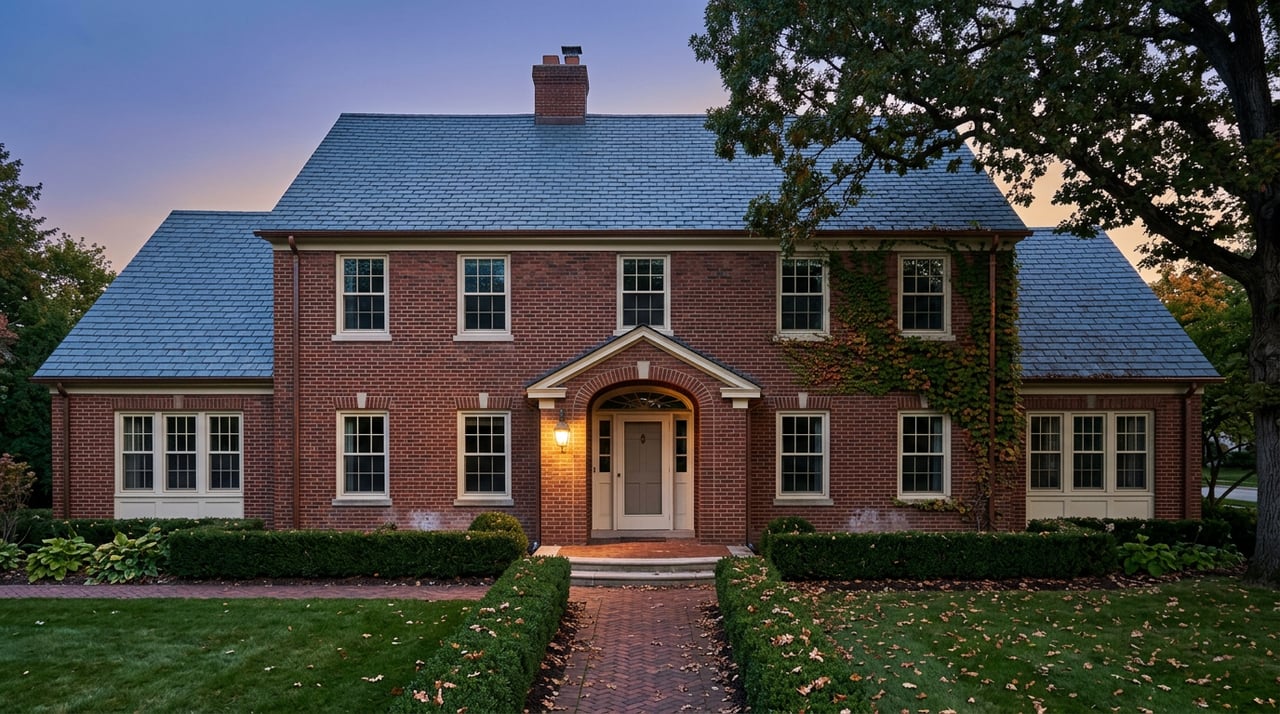
Country Club Denver’s Sixth Avenue Restaurant Returns
September 17, 2026
September 17, 2026
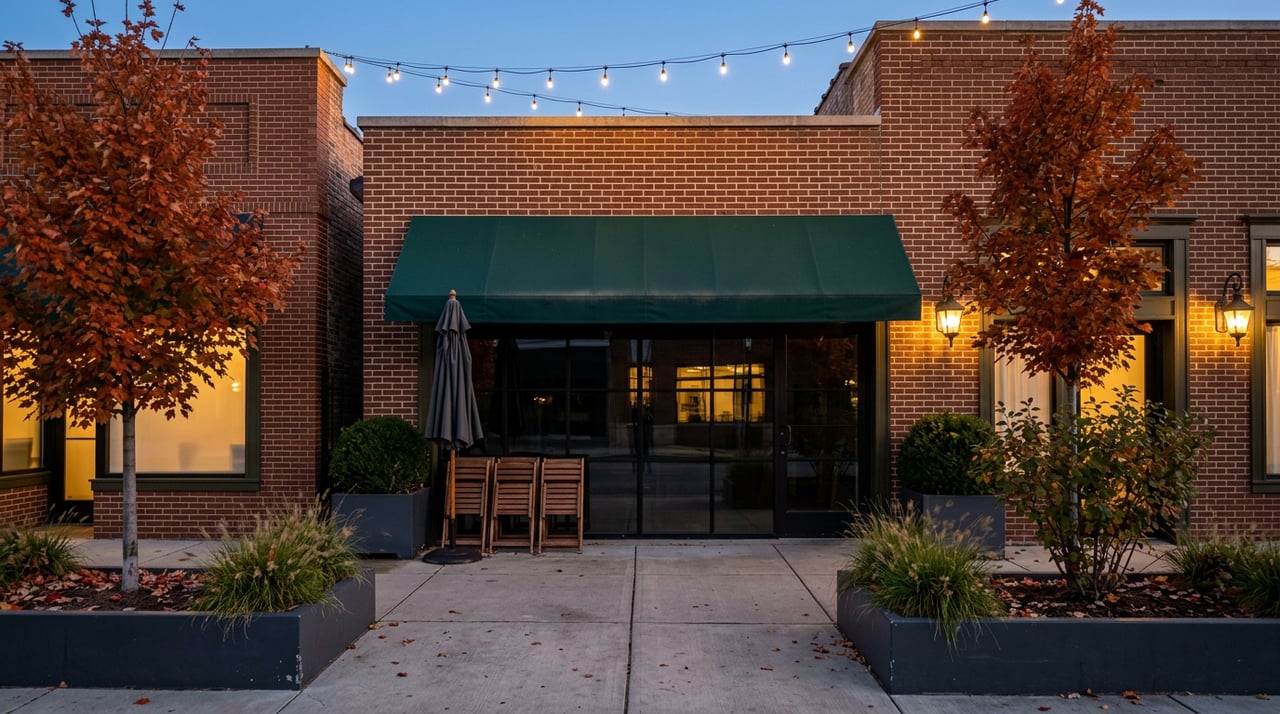
Walk east on Sixth Avenue past the gates that mark the edge of Country Club and you will pass block after block of brick facades, deep lawns, and driveways with no other traffic to compete with. Then, just past the historic district's own boundary line, you hit 1313 East Sixth Avenue, and for the first time in more than a year, the windows are lit again.
For eighteen years, that address belonged to Fruition, chef Alex Seidel's restaurant, before it closed in January 2025. The space sat dark for just over a year, a long silence for a spot that had become a fixture for neighbors walking down from Country Club Place or over from the Gates. On May 7 of this year, chef Quincy Cherrett reopened the doors as Madeline, his first brick and mortar restaurant after stints at Sushi Den, Izakaya Den, Colt & Gray, and Death & Co.
That is a restaurant story. But the reason it matters here, specifically, has less to do with the menu than with a fact about Country Club that most people driving through never notice.
Country Club is one of Denver's smallest neighborhoods by home count, somewhere around 375 to 380 residences depending on how you draw the line between the historic district and the surrounding area. The historic district itself runs roughly from Downing Street to University Boulevard, First Avenue to Fourth Avenue, with the boundary stretching up to Sixth Avenue along Race Street. That last detail matters: 1313 East Sixth Avenue sits right at the edge of that line, which is about as close to a commercial strip as the district gets.
The neighborhood is almost entirely residential. There is no cluster of shops, no coffee row, no restaurant block. What Country Club has instead is proximity: Cherry Creek's shopping district a few minutes west, Washington Park a few minutes south, and inside its own boundaries, essentially one address that has carried the weight of being the neighborhood's dining room for two decades running.
That is why a year of dark windows at 1313 felt different here than it would somewhere with five other options on the same block. There was no redundancy to fall back on. The neighborhood was, in effect, waiting to see what would happen to its one significant commercial anchor, and whether it would come back as something recognizable or get carved up into something smaller.
He did not play it safe by avoiding the comparison. He leaned into it.
Madeline occupies the same 1,100 square feet Fruition did, seats 48, and even inherited Fruition's wine cellar, though Cherrett has said the list will keep evolving with the seasonal menu rather than staying frozen in place. Architect Kevin Nguyen, who led the redesign, kept the bones of the space but changed its mood entirely: the dining room now reads in vibrant green walls and dark cherry wood tables, with smooth jazz replacing whatever ambiance came before. Cherrett described the overall feeling he was after in one word: elegant.
The menu draws from his own background rather than trying to recreate Seidel's. Early dishes include oysters with radish and green apple mignonette, beet carpaccio finished with a Thai red curry peanut sauce, lamb agnolotti with spring pea and morel mushrooms, and seared halibut with green curry and black forbidden rice. It is not a tribute act. Cherrett has talked about it as his own culinary path finally landing somewhere permanent, after years running the 22 Provisions food truck and the Eloise concept at Avanti Food Hall.
Asked about stepping into a space this well known, Cherrett told Westword:
"Seidel did an amazing job, and this kind of feels like he's just passed the torch down."
That framing, torch passed rather than space replaced, is probably why the reopening has registered as continuity rather than loss. Bryan Trott, who built his reputation at Brasserie Brixton and Alma Fonda Fina, runs the front of house. The restaurant is open Tuesday through Thursday from 5 to 9 p.m. and Friday and Saturday from 5 to 10 p.m.
Because Country Club does not have a business district to generate its social calendar, that calendar gets built by neighbors instead, largely through the Country Club Historic Neighborhood association. CCHN was formed in 1973, and even though membership is voluntary, around 300 of the roughly 375 homes in the district join every year, an unusually high participation rate for a neighborhood association that has no dues requirement tied to a mortgage or HOA.
This year's list of what that association has organized reads less like a newsletter and more like a running log of a neighborhood doing its own maintenance, in every sense of the word:
None of that requires a storefront. It requires people willing to organize it themselves, year after year, in a neighborhood that was designed almost entirely for houses and very little else.
Put the two threads together and the picture becomes clearer than either one on its own. Country Club protects its character less through commercial variety, since it has almost none, and more through the small number of things it does have holding steady. One restaurant address that gets treated with enough respect to reopen as itself rather than as something diminished. One volunteer association that plants trees, negotiates a street redesign, and throws a barbecue every September without being asked twice.
That is a different kind of stability than you find in neighborhoods that measure their vibrancy by how many new businesses opened this year. Country Club was never going to have that kind of turnover to begin with. What it has instead is a low number of things that matter, and evidence, as of this year, that those things can go dark for a while and still come back recognizable.
If you already live inside the Gates, none of this changes your Tuesday. But if you have ever wondered why a neighborhood this small and this quiet still feels like it has a pulse, the answer is sitting at 1313 East Sixth Avenue, and in a CCHN calendar that has not missed a season yet.
Don Bobeda has spent more than three decades working in Denver Metro neighborhoods like this one, where the story is rarely about what's new and almost always about what's been carefully kept. If you're curious what a home inside a district like Country Club is actually worth in today's market, or just want a local perspective before you make a move, reach out anytime.
Stay up to date on the latest real estate trends.
We pride ourselves in providing personalized solutions that bring our clients closer to their dream properties and enhance their long-term wealth.