Central Park Denver: Newer Homes With Urban Conveniences
May 21, 2026
May 21, 2026
If you want a Denver neighborhood that feels more planned than pieced together, Central Park stands out fast. For many buyers, especially those relocating, the appeal is simple: newer homes, everyday conveniences, and a layout designed around parks, trails, and connected living. If you are weighing Central Park against older Denver neighborhoods or suburban options farther out, this guide will help you understand what daily life here really looks like. Let’s dive in.
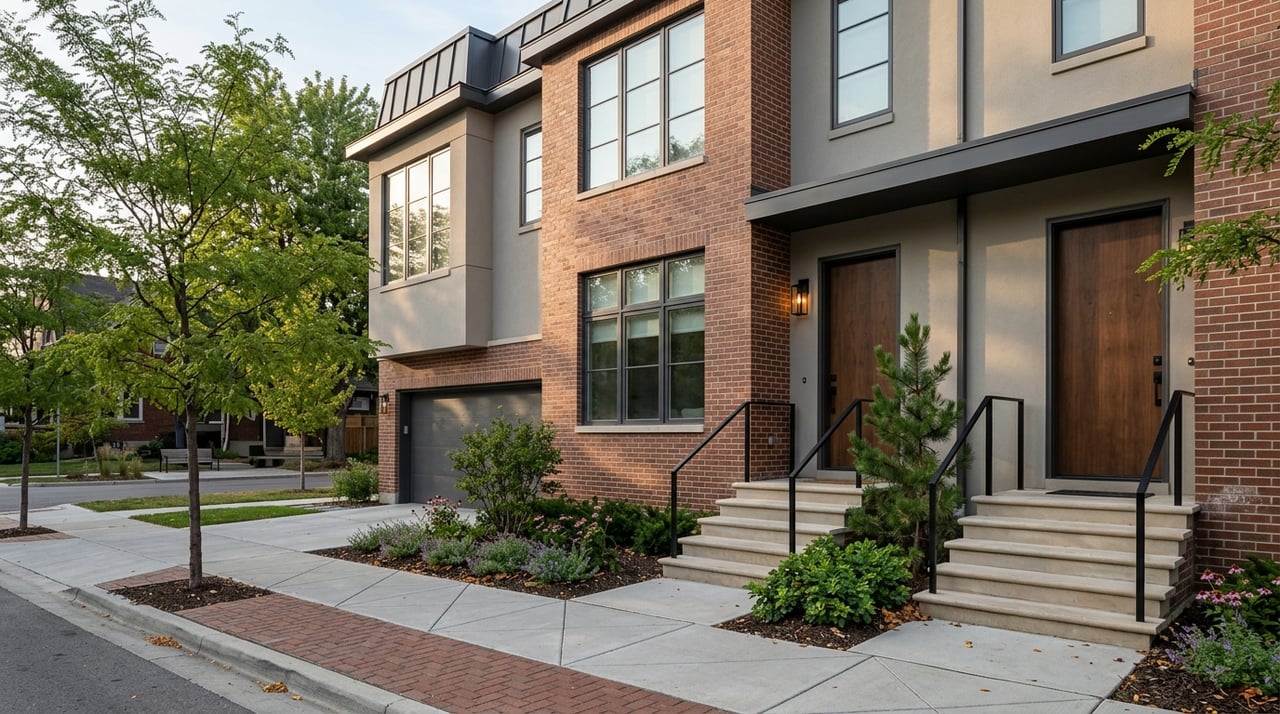
Central Park is not an older Denver neighborhood that evolved block by block over time. It was redeveloped from the former Stapleton International Airport site as a 4,700-acre master-planned community shaped by walkability, mixed uses, parks, greenways, front porches, and alley-loaded garages.
That planning still shows up in how the neighborhood functions today. The community includes 12 named neighborhoods, with the north side closer to the Rocky Mountain Arsenal National Wildlife Refuge and The Shops at Northfield, and the south side closer to Westerly Creek and Bluff Lake.
For you as a buyer, that means Central Park often feels more structured and amenity-rich than many older districts in Denver. It has the rhythm of a neighborhood built with long-term everyday use in mind, not just housing alone.
One of Central Park’s biggest draws is that “newer homes” here does not mean one look, one builder, or one price point. The community is in its final chapter of development, but new homes are still available in some areas.
Current and planned housing types include luxury townhomes, affordable homes, new condominium homes, and cottage-style single-family homes. One current example is Contour Townhomes in Northfield, which offers two- and three-bedroom layouts, 2.5 baths, studies, optional rooftop decks, and pricing starting in the $600s, with models slated for early 2026.
That variety matters if you want flexibility. You may be looking for a low-maintenance townhome, a detached home with newer systems and finishes, or a condo that keeps you close to daily conveniences.
Central Park also includes housing designed to serve a broader range of buyers and renters. According to the community’s affordable housing information, 10% of for-sale homes and 20% of for-lease homes are priced in the affordable range, and those homes are integrated throughout the neighborhood rather than separated into one area.
At the moment, the official for-sale income-restricted section reports no new income-restricted for-sale homes available. For renters, the listed affordable communities include Bluff Lake Apartments, Central Park Apartments II and III, Clyburn, Kappa Tower II, Moline Apartments, Northfield Apartments, and Parkside Apartments.
The community materials also note options for residents age 55+ among affordable offerings. For relocating buyers and renters, that helps paint a fuller picture of Central Park as a mixed housing environment rather than a one-note new-build district.
If outdoor access matters to you, this is one of Central Park’s strongest advantages. The neighborhood includes 60 parks, two dog parks, 62 miles of trails, seven neighborhood pools, and about 25% of its total acreage devoted to parks and nature.
The community also says almost every home is within a five-minute walk of a park. That kind of access can change how a neighborhood feels day to day, whether you are heading out for a quick walk, a bike ride, or time outside close to home.
The namesake Central Park is a major part of the neighborhood identity. The Master Community Association describes it as Denver’s third-largest park and the community’s premier park, with 80 acres that include athletic fields, jogging and biking paths, a sledding hill, an amphitheater, a play fountain, a one-acre playground, picnic areas, restrooms, and parking.
This is not just decorative green space. It is the kind of large-scale park that supports regular use, community events, and recreation across seasons.
The Master Community Association maintains shared assets such as pools, town centers, parks, and the trail network. It also programs concerts, markets, and seasonal events, which adds another layer of neighborhood activity beyond the built environment itself.
Public art is part of that picture too. The community’s art plan places nearly two dozen pieces across all 12 neighborhoods, giving different areas their own visual touchpoints.
A key part of Central Park’s appeal is that many daily needs are built into the neighborhood. Instead of relying on one small retail strip, the area has several everyday commercial nodes that support different routines.
The main retail centers are East 29th Avenue Town Center, Eastbridge, and The Shops at Northfield. Each one plays a different role, which helps Central Park function more like a complete neighborhood than a bedroom community.
East 29th Avenue Town Center was the neighborhood’s first town center. It remains a local gathering place for coffee, ice cream, concerts, and farmers markets.
If you value a neighborhood core with regular activity, this area helps deliver that experience. It gives the community a recognizable center rather than just scattered retail.
Eastbridge is described as a collection of boutique restaurants, shops, salons, and fitness studios. The Shops at Northfield adds local boutiques, national brands, large-format retail, Harkins Theatre Northfield 18, and The Improv.
That mix can make everyday life more convenient. You may be able to handle errands, dining, entertainment, and casual shopping without driving across the metro.
Just outside the neighborhood, Stanley Marketplace adds another option with more than 50 businesses focused on dining, shopping, wellness, and creative uses in a former aviation manufacturing facility. For buyers comparing lifestyle convenience, nearby destinations like this strengthen Central Park’s urban-meets-neighborhood feel.
Central Park benefits not only from its own parks and trails, but also from city recreation amenities nearby. The Central Park Recreation Center is a regional Denver facility with an indoor pool, lazy river, splash area, 25-yard lap pool, slide, gym, and multipurpose rooms.
The Central Park Pavilion also sits on the former airport grounds with Rocky Mountain views. These public amenities expand what the neighborhood offers beyond the community-managed spaces.
Founders’ Green and Amphitheater, near the 29th Avenue Town Center, has hosted concerts, theatre, movies, and other special events. Event programming also centers around the South Green, the North Green in Conservatory Green, and The Cube at Northfield Boulevard.
For many Denver buyers, location is not just about the home. It is about how easily you can move between work, travel, and everyday destinations. Central Park has a commute profile that is unusual for a newer community because it combines rail access, airport access, and freeway connectivity.
Central Park Station is an RTD park-n-ride near Central Park Boulevard and Smith Road. RTD says it has 1,500 parking spaces, paid parking, nine bus routes, and A Line rail service.
The A Line is 23 miles long with eight stations. RTD says trains run every 15 minutes during daytime hours and every 30 minutes early and late, and the trip between Denver Union Station and Denver International Airport takes about 37 minutes.
Because Central Park Station is on that line, the neighborhood offers an option that does not depend entirely on driving. If you travel often or want another path into downtown, that can be a meaningful advantage.
Road access is another practical plus. The Central Park Boulevard at I-70 interchange includes new ramps to I-70 and I-270 and was designed to improve access to nearby residential and commercial development.
For buyers who split time between city destinations, the airport, and suburban work hubs, that combination of rail and freeway access can be hard to replicate. It is one of the clearest reasons Central Park appeals to relocation buyers.
Central Park tends to work well for buyers who want newer housing, planned amenities, and a neighborhood where many daily activities can happen close to home. It is also a strong option if you value easier airport access and a more connected route to downtown Denver.
Compared with older Denver neighborhoods, Central Park generally offers more recent construction, more formalized amenities, and a more structured community framework. Compared with many suburban areas farther south, it offers closer access to both downtown and Denver International Airport.
That said, every buyer has a different definition of fit. If you want historic architecture, very large lots, or a more organic neighborhood pattern, other parts of Denver Metro may align better with your goals.
If you prefer predictable upkeep, community events, contemporary housing stock, and a layout built around parks and convenience, Central Park deserves a close look. For buyers deciding between city energy and suburban ease, it often lands in a very practical middle ground.
Whether you are relocating across town or across the country, choosing the right neighborhood is about more than square footage. With experience across Denver Metro, including relocation support and guidance on both newer homes and established neighborhoods, Don Bobeda can help you evaluate Central Park in the context of your lifestyle, commute, and long-term plans.
Stay up to date on the latest real estate trends.
We pride ourselves in providing personalized solutions that bring our clients closer to their dream properties and enhance their long-term wealth.